
Hybrid vs. On-Grid vs. Off-Grid in 2026: Which Inverter Type Actually Makes Sense Now?
Published 22 July 2026 · 7 min read
This is a 2026 answer, not a timeless one — worth saying upfront, because the right inverter choice for a new solar buyer has genuinely shifted this year. Net metering, the old one-for-one exchange with the grid, is no longer available to new applicants; new connections now fall under net billing, with export credited at a separate, lower rate than what you pay to import. That single regulatory change moves the math on all three inverter types below, and most of the comparisons still circulating online haven't caught up to it.
The Three Types, Plainly
On-grid (grid-tied, no battery) is the simplest and cheapest system: panels, inverter, grid connection. Any power you generate beyond what you're using at that instant goes straight to the grid. No battery means no backup during a grid outage — when the grid goes down, your system shuts off too, by design.
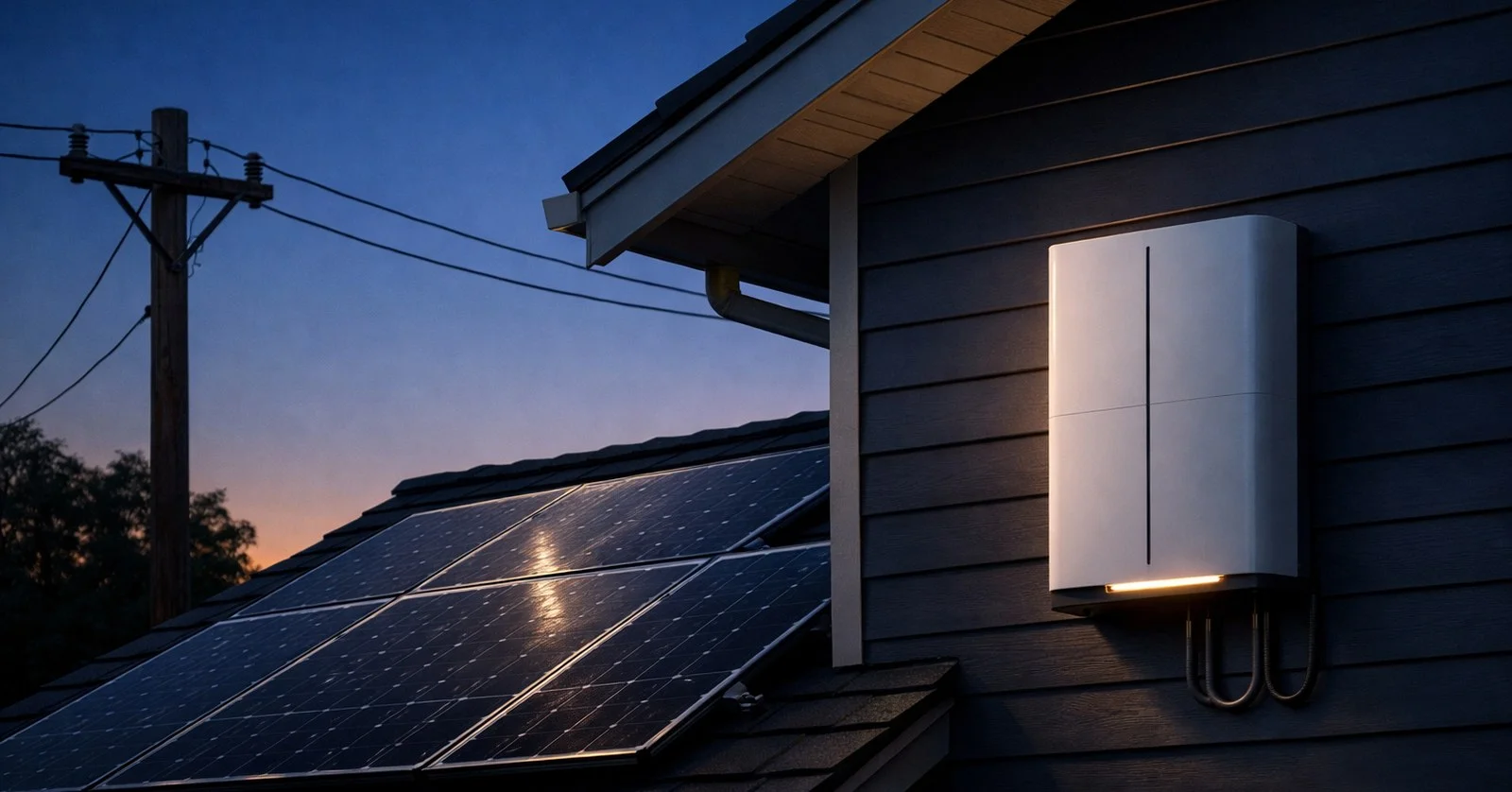
Hybrid (grid-tied, with battery) adds a battery and a smarter inverter that can route power three ways: to your loads directly, into the battery for later, or out to the grid. It can run in different modes — export excess, store excess, or a self-consumption/zero-export mode that never sends power out at all.
Off-grid (no utility connection at all) is fully independent — panels, inverter, and a battery bank sized to get you through your worst realistic stretch of cloudy days with zero help from anywhere else. It's the standard choice where there's genuinely no grid to connect to, and a rare choice everywhere else, for a reason covered below.
What Net Billing Actually Changes
Under the old net-metering regime, exporting your surplus generation to the grid was close to a wash — a unit sent out largely offset a unit pulled back later at the same rate. That made pure on-grid systems, sized generously and left to export whatever wasn't used immediately, a genuinely sound economic choice.
Net billing breaks that symmetry. Your exports are now worth meaningfully less than your imports. A system sized the old way — built to export a lot — now gives away a chunk of its value at a discounted rate instead of keeping it. That's the shift that makes self-consumption — using or storing your own generation instead of exporting it — the more valuable strategy for anyone applying today.
So Is Off-Grid the Answer?
This is where we'll push back a little on the obvious-sounding conclusion. It's tempting to reason: exporting is worth less now, so why stay connected to the grid at all — go off-grid, keep everything you generate. But true off-grid isn't usually the cheaper path to that outcome, and it's worth being precise about why.
An off-grid system has to be sized to survive entirely alone — no grid to lean on during a run of cloudy days or a spike in demand. That means a bigger battery bank and often a bigger array than a grid-connected system needs, purely as insurance against a scenario a grid-tied system never has to worry about. That insurance costs money, and it's the reason true off-grid systems are typically more expensive per kWh of reliable capacity than hybrid ones, not less.
What actually captures the benefit people are reaching for when they say "off-grid" is a hybrid inverter run in self-consumption or zero-export mode: keep the grid connection as a backup you rarely need, size the battery for your typical day rather than your worst-case week, and simply never register for — or rely on — net billing's export credit at all. You get almost all of the independence-from-a-low-export-rate benefit, without paying for a battery bank sized to survive completely alone.
Where True Off-Grid Still Wins
None of this makes off-grid the wrong choice everywhere. If a site genuinely has no reliable grid access — common in some rural areas outside our core cities — off-grid isn't being compared against hybrid on cost at all; it's the only option that works, and the calculation is different.
How We Size This
Inverter type isn't a preference we ask you to state upfront — it falls out of the same survey that sizes your panels. Your actual outage frequency, your evening vs. daytime load split, and your budget for battery capacity all point toward one of these three configurations more clearly than a generic comparison article ever can.
A note on accuracy: Net billing rates and terms are set by NEPRA and have changed more than once in 2026. This article reflects our understanding as of the publish date above — confirm current terms with your UKS engineer before finalizing a system choice.
Not sure which type fits your site?
Our engineers size this against your real usage during your free survey.